

Even More Common Misconceptions About the Brits

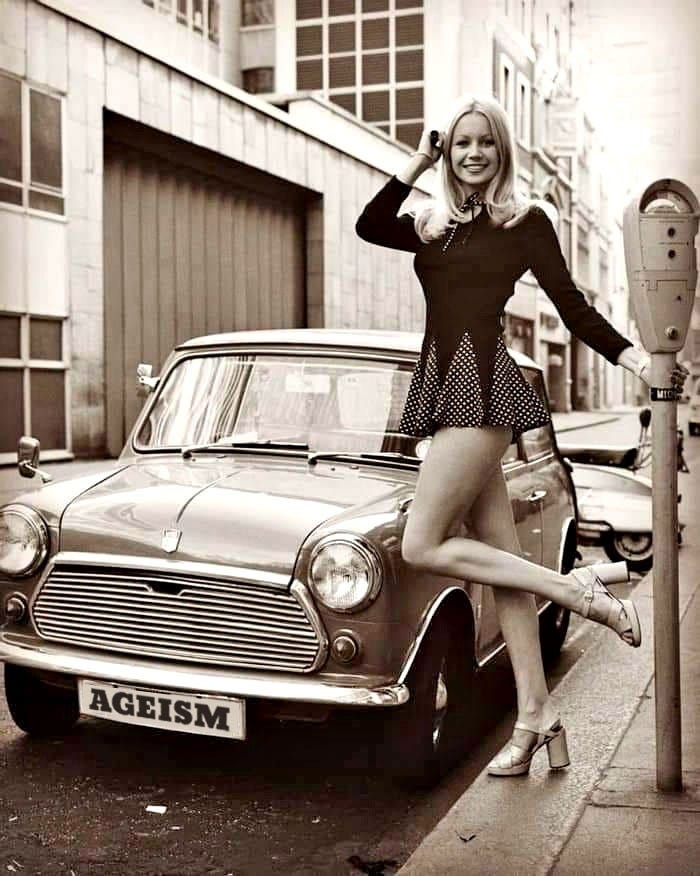
The fact, in most instances, is that the Brit is dying to bare his soul to you, and hasn’t the slightest interest in talking, as is commonly believed, about the, uh, bloody weather. Because the weather has remained identically erratic, and prone to chilly, damp greyness since before the Romans, Brits actually find it numbingly tiresome to talk about. Show the slightest interest, and they will leap at the chance to talk instead about young Simon’s substance abuse problems or his sister Sharon’s compulsive promiscuity. Standing nose to armpit with a local in a District Line train bound for Cockfosters (which Londoners find amusing to pronounce Cocksuckers, or maybe I’ve just made that up, along with my advice about not queuing and assuming that Brits are keen to bare their souls to complete strangers), let’s say, it is not only permissible, but indeed welcomed, to begin a conversation by saying, for instance, “My doctor told me a couple of months ago that I was drinking myself to death, but I think I may finally have gotten it under control. You?” If the Brit winces, it isn’t because you’re sharing something deeply personal, but saying “gotten,” which the Brits hear as gratingly colonial.

In our District Line train, many locals will indeed be avoiding eye contact, much less conversation, with one another. But at least a couple are sure to be discussing the most intimate details of their lives quite audibly, on their phones. “Am I going to have it?” one of them might muse into her Samsung Galaxy. “I’m not so sure I will, you know, not with Jayden insisting he’s not ready to be a parent. The DNA test? Oh, the baby’s definitely his. There’s no question about that.” It’s as though the Brit imagines his or her mobile phone to somehow render inaudible anything she says into it, regardless of the volume at which she says it.
This, by the way, is roughly analogous to the belief shared by those who prepare British street food that little plastic gloves make the hands sterile. They scratch their heads, pick their noses, handle money, and then, without a care in the world, grab handfuls of shredded lettuce to put in your falafel wrap, apparently secure in the knowledge that germs are somehow unable to adhere to vinyl. Science works in mysterious ways in the UK.
Speaking of mobile phones, it occurs to me that a shop one sees in every high (that is, main) street in the land has the second worst name in the history of commerce — Carphone Warehouse. One can imagine that it seemed like a splendid idea in 1989, when the company was founded. At that time, most people required a small wheelbarrow to move to and fro the huge mobile phones of the day, as witness the brief success of Mobile Phone Wheelbarrow Warehouse. But then, around two weeks later, mobile phones began shrinking. Now, a quarter-century and more later, Carphone Warehouse remains the mobile phone supplier of choice for persons who regard it as cool and retro to carry Sony Walkmans on which to listen to cassettes, and to take into Starbucks portable typewriters on which to work on the screenplays they’re pretending to write.
The worst name in the history of commerce was of course that of Jack Hitler Chevrolet and Subaru, a short-lived automobile dealership in a Los Angeles suburb in the late 1990s.
There was a time when London seemed to vibrate with excitement. I’m speaking not of the Swinging London days of the mid-60s, which I dreamed of as a schoolboy (oh, for a dolly bird of my own!), but didn’t actually observe, but of most of the following decade and a half. Early on, there was glam rock, and then, a few years later, punk, which the Brits did much more stylishly than the New Yorkers who invented it, and then synth-pop. The Kings Road felt like the most exciting place on earth. Wonderful music blared from a thousand boutiques that sold wonderfully outrageous clothing of the sort also on offer in the glorious Kensington Market, where kids dressed up as their favourite pop culture icons — James Dean, Marilyn Monroe, and of course Elvis — to sell wonderfully lurid clothing to punks, New Romantics, metalheads, goths, trance, and ingesters of ecstasy, The windows of even the most ordinary men’s shops were filled with long-eye-lashed, preposterously androgynous mannequins in beautifully tailored clothing. As late as the mid-80s it was hard to get on a London bus on which at least one young person with a unique architectural coiffure, or someone of indeterminable sex, wasn’t riding. Punks, never saying die (and never putting the requisite apostrophe in Punk’s not dead) tormented their hair into two-foot-high mohawks in colours that don’t occur in nature, or even out of it.
All that’s a distant memory now. You’d be as likely to see as much wacky creativity and glamour in Cleveland these days.
The Kings Road was once the home of Granny Takes a Trip, where the world’s pre-eminent pop musicians bought their psychedelic finery. It’s now wall-to-wall overpriced chain boutiques selling clothing so boring their sales staves are barely able to remain awake. Where once there was the Chelsea Drugstore, with its famous chrome and neon soda fountain, and its mention in a Rolling Stones song, there is now a McDonald’s.
Kensington Market is now a multiplex cinema showing the latest Adam Sandler (s)hit(e), and one’s lucky to see a girl who’s dyed her hair green every few days.